5 Things You Must Know Before Buying Used Cars in Turks and Caicos
Buying a used car in Turks and Caicos can be a practical way to enjoy greater freedom, especially for residents, long-term visitors, and people who need dependable transportation for work and daily activities. However, purchasing a pre-owned vehicle on the islands requires more consideration than simply comparing prices and choosing a model that looks attractive.
The Turks and Caicos Islands have unique driving conditions, import requirements, road conditions, weather patterns, and vehicle-market considerations. A car that appears inexpensive at first can become considerably more expensive if it has hidden mechanical problems, a complicated ownership history, or costly parts and maintenance requirements.
Before purchasing a used vehicle, we should look beyond the asking price. We need to consider the car’s mechanical condition, documentation, mileage, availability of parts, fuel economy, insurance, registration, and suitability for local roads.
Here are five important things we must know before buying a used car in Turks and Caicos.
1. Check the Vehicle’s Complete History Before Buying
One of the most important steps when buying a used car is understanding where the vehicle came from and how it has been used.
In Turks and Caicos, some used vehicles are imported from other countries. Therefore, we should ask the seller for as much information as possible about the vehicle’s history. Important details include:
- Previous ownership
- Vehicle identification number (VIN)
- Import history
- Previous registration information
- Maintenance and servicing records
- Accident history
- Mileage records
- Previous repairs
- Replacement parts
- Whether the vehicle has ever suffered significant water or storm damage
A vehicle may look excellent from the outside while hiding mechanical or structural problems. Cosmetic repairs can make an older car appear newer than it actually is.
We should compare the mileage shown on the dashboard with available maintenance records. If the vehicle has unusually low mileage but shows substantial interior, tire, brake, or suspension wear, that can be a reason to investigate further.
The VIN should also be checked carefully against the vehicle documentation. Any inconsistency in the VIN, registration information, or paperwork should be treated seriously.
A clear vehicle history gives us greater confidence that we know what we are purchasing.
2. Always Arrange a Professional Mechanical Inspection
A test drive is important, but it should never replace a professional inspection.
A used vehicle can feel perfectly normal during a short drive while having problems that only become apparent after several hours of operation. Before committing to a purchase, we should have a qualified mechanic inspect the vehicle.
The inspection should cover the major mechanical and electrical systems, including:
- Engine condition
- Transmission performance
- Brake system
- Steering components
- Suspension
- Tires and wheels
- Battery and charging system
- Air-conditioning system
- Cooling system
- Electrical components
- Lights and indicators
- Fluid leaks
- Exhaust system
- Undercarriage
- Body and chassis
- Signs of previous accident repairs
The air-conditioning system deserves particular attention in Turks and Caicos because of the warm tropical climate. A weak or unreliable air conditioner can become a major inconvenience, particularly during daily driving.
We should also look carefully for corrosion and rust. Coastal environments can expose vehicles to salt-laden air, which may accelerate corrosion on certain metal components.
During the test drive, we should pay attention to unusual engine noises, vibrations, steering behavior, braking performance, transmission shifts, warning lights, and suspension noises.
Spending money on an inspection before purchasing a vehicle can potentially save thousands of dollars in unexpected repairs later.
3. Understand the True Cost of Owning a Used Car
The purchase price is only one part of the total cost of vehicle ownership.
Before buying a used car in Turks and Caicos, we should calculate the complete ownership cost, including:
- Purchase price
- Registration expenses
- Insurance
- Fuel
- Routine servicing
- Tires
- Brake replacements
- Battery replacement
- Repairs
- Imported replacement parts
- Government-related vehicle charges
- Potential transportation or shipping costs for parts
A vehicle with a low purchase price is not necessarily the cheapest vehicle to own.
For example, an inexpensive older vehicle may require frequent repairs or specialized parts. If replacement components need to be imported, repairs can take longer and cost more than expected.
Fuel economy is another important consideration. If we use a vehicle every day for commuting, errands, business, or family transportation, even a small difference in fuel consumption can become significant over the course of a year.
We should therefore compare vehicles based on total cost of ownership rather than purchase price alone.
A reliable vehicle with reasonable fuel consumption and readily available parts can sometimes provide much better value than a cheaper vehicle that requires frequent maintenance.
4. Choose a Vehicle That Makes Sense for Island Driving
Not every vehicle is equally suitable for driving in Turks and Caicos.
Before choosing a used car, we should consider how and where we will use it. Local roads, driving distances, weather, parking conditions, and lifestyle should all influence the decision.
For many drivers, practical considerations such as reliability, ground clearance, fuel economy, maneuverability, and air conditioning can be more important than luxury features.
Depending on our needs, we might consider:
- Compact cars for economical daily transportation
- SUVs for additional space and versatility
- Crossovers for a balance between comfort and practicality
- Pickups for work and equipment
- Larger vehicles for families or group transportation
We should also consider the vehicle’s suspension and tires. Roads can vary considerably, and a vehicle that is poorly suited to local conditions may experience accelerated wear.
If we regularly travel on less-developed roads, a vehicle with appropriate ground clearance and durable suspension may be preferable to a low-slung vehicle designed primarily for smooth urban roads.
At the same time, purchasing a very large vehicle without needing one can unnecessarily increase fuel and maintenance expenses.
The best choice is the vehicle that matches our actual driving requirements.
Before handing over money, we should make sure the seller has the legal right to sell the vehicle and that the required documentation is complete.
We should carefully review the available ownership and vehicle documents, including registration information and any paperwork associated with the vehicle’s importation or previous ownership.
The vehicle information should correspond with the physical vehicle. In particular, we should verify:
- VIN/chassis identification
- Registration details
- Seller’s ownership information
- Vehicle make and model
- Year of manufacture
- Engine information where applicable
- Mileage
- Import documentation where applicable
- Outstanding obligations or issues
- Insurance requirements
- Transfer requirements
We should also understand the process for transferring ownership and registering the vehicle before completing the transaction.
If a seller pressures us to make a quick payment without allowing time to inspect the vehicle or verify the paperwork, we should be cautious.
A legitimate transaction should provide sufficient opportunity to review the vehicle and documentation.
What Should We Look for During a Used-Car Test Drive?
A test drive should be more than a short trip around the block.
We should start the vehicle from cold if possible. This can reveal issues that might disappear once the engine reaches operating temperature.
During the test drive, we should check whether:
- The engine starts smoothly.
- The vehicle accelerates without hesitation.
- The transmission changes gears properly.
- The steering remains stable.
- The brakes operate smoothly without excessive vibration.
- The suspension does not produce unusual knocking sounds.
- The air conditioning provides sufficient cooling.
- No warning lights remain illuminated.
- The vehicle does not overheat.
- There are no unusual smells, smoke, or fluid leaks.
We should also test the vehicle at different speeds and, where safe and appropriate, over different road surfaces.
A careful test drive can reveal problems that are not obvious when the vehicle is parked.
How to Avoid Buying a Flood-Damaged or Heavily Repaired Vehicle
Because vehicles can be exposed to severe weather and tropical conditions, we should be particularly careful about signs of water damage.
Some flood-related problems may not appear immediately. Water can affect electrical systems, wiring, sensors, upholstery, bearings, and other components.
We should look for:
- Musty or unusual odors
- Damp carpets
- Water stains
- Corrosion in unusual locations
- Discolored upholstery
- Rust around electrical connections
- Inconsistent electrical operation
- Recently replaced carpeting in an otherwise older vehicle
- Signs that interior components have been removed or replaced
We should not automatically assume that a vehicle with cosmetic repairs is problematic. However, unexplained repairs combined with electrical or corrosion issues deserve further investigation.
A professional inspection is particularly valuable when the vehicle’s history is unclear.
Should We Buy From a Dealer or Private Seller?
Both options can have advantages and disadvantages.
A dealer may offer a more structured purchasing process, potentially providing documentation, inspection information, or limited warranties depending on the seller and transaction.
A private seller may offer a lower asking price, but we should take greater responsibility for verifying the vehicle’s condition, ownership, history, and paperwork.
Regardless of where we purchase, the same principle applies:
We should independently verify the vehicle before paying.
A professional inspection should not be skipped simply because the seller appears trustworthy.
How to Negotiate the Price of a Used Car
Once we know the vehicle’s actual condition, we are in a much stronger position to negotiate.
We should avoid negotiating based only on emotion or appearance. Instead, we can use legitimate ownership costs and identified repairs to determine whether the asking price is reasonable.
For example, if the vehicle requires new tires, brake work, suspension repairs, or an air-conditioning repair, those expenses should be considered when evaluating the overall value.
We should also compare similar vehicles available in the local market.
A good negotiation is not necessarily about obtaining the lowest possible price. It is about reaching a price that reflects the vehicle’s condition, age, mileage, history, equipment, and expected maintenance requirements.
Questions to Ask Before Buying a Used Car in Turks and Caicos
Before completing the purchase, we should ask the seller:
- How long have you owned the vehicle?
- Why are you selling it?
- Where was the vehicle originally purchased?
- Has it been involved in an accident?
- Has it experienced water or storm damage?
- Is the mileage verified?
- Do you have service records?
- When was the last major service?
- Have the tires or brakes recently been replaced?
- Does the air conditioning work properly?
- Are there any known mechanical problems?
- Are all vehicle documents available?
- Is the seller the registered owner?
- Are there any outstanding issues associated with the vehicle?
The answers should be consistent with the vehicle’s physical condition and documentation.
Final Checklist Before Buying a Used Car
Before making the final payment, we should complete a simple checklist:
✓ Inspect the exterior and interior
✓ Check the VIN and documentation
✓ Review the vehicle’s history
✓ Arrange a professional mechanical inspection
✓ Take a thorough test drive
✓ Check for rust, corrosion, and water damage
✓ Test the air-conditioning system
✓ Calculate fuel and maintenance costs
✓ Verify ownership and registration requirements
✓ Confirm insurance requirements
✓ Compare the asking price with similar vehicles
✓ Get the purchase terms in writing
✓ Complete the ownership transfer properly
Taking these steps can significantly reduce the risk of purchasing a vehicle that becomes an expensive problem.
Conclusion: Buy for Reliability, Not Just Price
Buying a used car in Turks and Caicos can be an excellent decision when we approach the process carefully. The right vehicle can provide reliable transportation and good value for years, while the wrong vehicle can quickly turn a seemingly affordable purchase into an expensive maintenance project.
The most important lesson is simple: do not judge a used car by its appearance or asking price alone.
We should investigate the vehicle’s history, arrange a professional inspection, verify all documentation, understand the total cost of ownership, and choose a vehicle suited to island driving conditions.
A little research before purchasing can make a substantial difference. By taking the time to inspect, verify, compare, and negotiate carefully, we can make a much more informed decision and enjoy greater confidence behind the wheel in Turks and Caicos.
 by
by 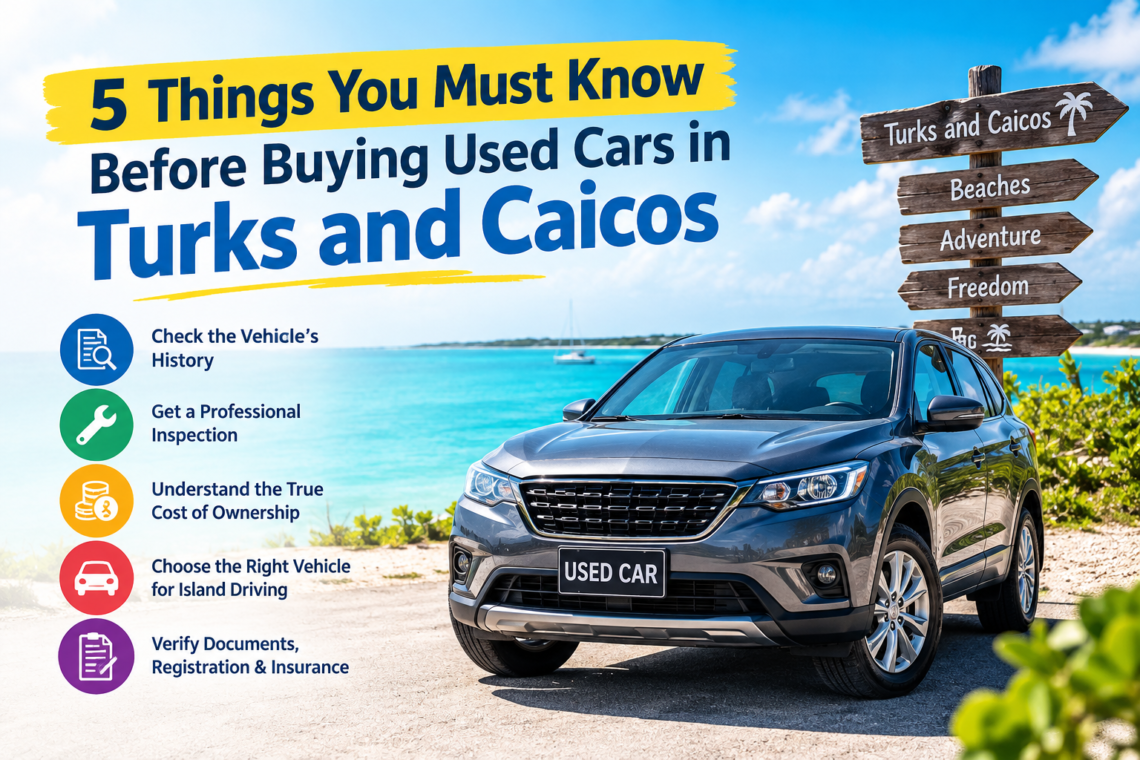









Join The Discussion